Are you looking for a versatile, portable, and effective way to elevate your fitness routine, whether at home or on the go? Exercise resistance bands are revolutionary tools that have transformed how people approach strength training, rehabilitation, and overall fitness. Forget bulky weights and expensive gym memberships; these simple yet powerful elastic loops, tubes, and sheets offer a dynamic pathway to building muscle, enhancing flexibility, and improving functional movement. With over a decade of hands-on experience in the fitness world, specializing in resistance bands, I’m here to guide you through everything you need to know, from understanding their core benefits to selecting the perfect band for your unique goals. Let’s dive into the world of resistance bands and discover how they can unlock your full potential.
What Are Resistance Bands and Why Should You Use Them?
Resistance bands are elastic tools, typically made from latex, rubber, or fabric, designed to provide tension against muscle contraction during exercise. Unlike free weights, which rely on gravity, resistance bands offer variable resistance throughout the range of motion—meaning the further you stretch the band, the more challenging the exercise becomes. This unique quality engages more muscle fibers and stabilizes joints, making them an excellent choice for everyone from beginners to seasoned athletes.
The benefits of incorporating exercise resistance bands into your routine are extensive. They are incredibly versatile, allowing you to target virtually every major muscle group for a full-body workout. Their progressive resistance helps build strength, improve muscle stability, and enhance flexibility, which are critical components for injury prevention and recovery. Furthermore, resistance bands are remarkably joint-friendly, placing less stress on your body compared to traditional weights, making them ideal for rehabilitation or individuals with joint sensitivities. Their lightweight and portable nature means you can take your workout anywhere, from your living room to a hotel room, making fitness accessible and convenient. They can also improve coordination and balance by requiring controlled motion in open space.
Popular Types of Resistance Bands on the Market
The world of exercise resistance bands offers a variety of shapes and styles, each designed for specific purposes and exercises. Understanding these differences is key to maximizing your workout effectiveness.
1. Power Bands (Long Loop Bands): These are continuous, thick rubber or latex loops, often used for strength training, assisted pull-ups, and mobility work. They come in various widths, with wider bands offering higher resistance.
- Pros: Extremely versatile for full-body workouts, excellent for assisted bodyweight exercises (like pull-ups), great for adding resistance to squats, deadlifts, and presses.
- Cons: Can sometimes roll up during certain movements, especially on bare skin.
- Applications: Bench press, deadlifts, squats, assisted pull-ups, bicep curls, overhead presses, full-body compound movements.
2. Fabric Loop Bands (Booty Bands / Hip Circles): Shorter, wider loops made from durable fabric with anti-slip grips on the inside. These are especially popular for lower body workouts.
- Pros: Do not roll, pinch, or slide, making them comfortable for glute and hip exercises. Highly durable.
- Cons: Primarily designed for lower body and glute activation; less versatile for upper body or full-range movements.
- Applications: Glute bridges, squats, lateral walks, clam shells, hip thrusts, leg abductions.
3. Exercise Tubes with Handles: These bands feature a tube-like design with plastic or foam handles on each end. They often come with door anchors for more exercise variety.
- Pros: Comfortable grip, easy to anchor, excellent for replicating cable machine exercises.
- Cons: Less direct feedback on muscle engagement compared to loop bands, handles can sometimes wear out.
- Applications: Chest presses, rows, bicep curls, tricep extensions, shoulder raises, resistance for sports-specific movements.
4. Latex Flat Exercise Bands (Therapy Bands): Thin, wide, flat sheets of latex, typically sold in rolls or cut into various lengths. They offer lighter resistance levels.
- Pros: Very flexible, ideal for physical therapy, rehabilitation, stretching, and mobility exercises. Affordable.
- Cons: Can easily roll, less resistance for advanced strength training, prone to tearing if not handled carefully.
- Applications: Gentle stretching, recovery exercises, pre-habilitation, Pilates, yoga, improving range of motion.
5. Mini Loop Bands: Small, thin rubber or latex loops, similar in material to power bands but much smaller.
- Pros: Excellent for targeting smaller muscle groups and activation exercises, particularly for hips and glutes. Highly portable.
- Cons: Limited range of motion due to size, often only suitable for specific isolation exercises.
- Applications: Glute activation, rotator cuff exercises, ankle mobility, dynamic warm-ups.
Comparing Popular Resistance Band Brands
While directly naming and comparing specific brands without real-time data is challenging, we can outline the crucial factors to consider when evaluating and comparing resistance band brands. Focus on these aspects to make an informed decision, as reputable brands excel in these areas.
Detailed Comparison Table
|
Our Picks for the Best Resistance Bands in 2026
As an Amazon Associate I earn from qualifying purchases.
|
||
| Num | Product | Action |
|---|---|---|
| 1 | 6PCS Silicone Ankle Strap for Swimming, Legs Resistance Exercise Swim Band, Aquatic Resistance Belt, General Swimming AIDS for Kids and Adults |

|
| 2 | Resistance Bands for Working Out with Workout Bands Guide. 4 Booty Bands for Women Men Fabric Elastic Bands for Exercise Bands Resistance Bands for Legs Bands for Working Out Hip Thigh Glute Bands Set |
|
| 3 | Resistance Bands for Working Out, 5-Pack Elastic Exercise Bands for Strength Training, Stretching, Workout; Home Gym Equipment for Women Men, Pilates Yoga Physical Therapy, Leg Glute Arm Exercise Kit |
|
| 4 | Resistance Bands, Pull Up Assist Bands - Workout Bands, Eexercise Bands, Long Resistance Bands Set for Working Out, Fitness, Training, Physical Therapy for Men Women |
|
| 5 | Pull Up Bands, Resistance Bands, Pull Up Assistance Bands Set for Men & Women, Exercise Workout Bands for Working Out, Body Stretching, Physical Therapy, Muscle Training |
|
| 6 | Upgraded Pedal Resistance Band with Handle, Soft Durable Fashion Puller Exercise with Thickened 6 Tension Ropes, Tube Pedal Resistance Device for Abdomen, Waist, Arm, Leg, Core/ABS |
|
| 7 | Pull Up Assistance Bands, 5-Level Resistance Bands for Working Out, Pull Up Bands for Men & Women, Exercise Bands for Full-Body Training, Fitness, Physical Therapy, Stretch Workout Bands at Home, Gym |
|
| 8 | VEICK Resistance Bands, Exercise Bands, Workout Bands, Resistance Bands for Working Out with Handles for Men and Women, Exercising Bands for Fitness Weights Work Out at Home |
|
| 9 | WHATAFIT Resistance Bands, Exercise Bands,Resistance Bands for Working Out, Work Out Bands with Handles for Men and Women Fitness, Strength Training Home Gym Equipment |
|
| 10 | 5 Pcs Professional Resistance Bands. Latex-Free, Elastic Band, Work Out Bands, Stretch Bands for Working Out Women or Men, Exercise Bands Set for Physical Therapy, Yoga, Pilates |
|
| Feature | High-Quality Brands | Mid-Range Brands | Budget Brands |
|---|---|---|---|
| Material | Premium natural latex, reinforced woven fabric | Standard latex, blended fabric | Basic latex, thin fabric |
| Durability | Exceptional; multiple layers, anti-snap design | Good; solid construction | Moderate; may show wear faster |
| Resistance Levels | Wide range (light to extra-heavy), clearly marked | Standard range (light, medium, heavy) | Limited range, less precise resistance |
| Price Range | Higher-end (often sold in sets) | Moderate (good value for money) | Lower-end (individual bands or basic sets) |
| User Reviews | Consistently positive, highlighting longevity & performance | Generally positive, some minor complaints | Mixed reviews, often citing durability issues |
| Comfort/Grip | Smooth latex, non-slip fabric interiors, ergonomic handles | Standard comfort, basic handle designs | May be less comfortable, can roll or pinch |
| Warranty/Support | Often offer guarantees and responsive customer service | Basic warranty or return policy | Limited or no warranty |
Insights on Brand Comparison:
> “When evaluating resistance bands, don’t just look at the price. The quality of the material and the consistency of resistance are paramount for both safety and effectiveness. Investing in a brand known for durability will save you money and frustration in the long run.” – Dr. Elena Rodriguez, Sports Physiotherapist and Fitness Expert
How to Choose the Right Resistance Bands
Selecting the appropriate exercise resistance bands is crucial for a safe and effective workout. It’s not a one-size-fits-all decision; your choice should align with your fitness level and aspirations.
Define Your Training Goals
Before purchasing, ask yourself what you aim to achieve with resistance bands. Are you looking to build significant muscle mass and strength, or is your focus on improving flexibility and mobility? Perhaps you’re recovering from an injury and need gentle resistance for rehabilitation. Your goals will directly influence the type of band and resistance level you need. For instance, heavier power bands are excellent for strength training, while lighter flat bands are better suited for physical therapy.
Select the Appropriate Resistance Level
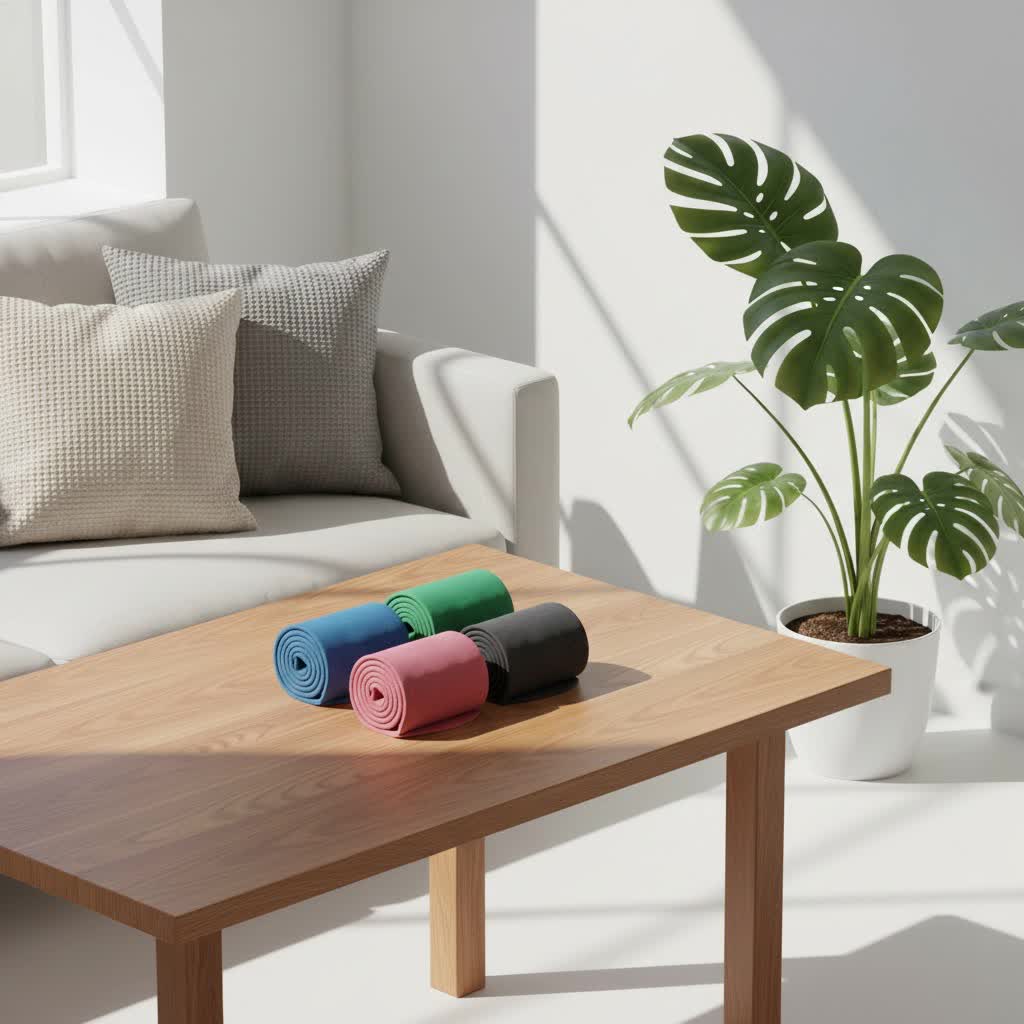
Resistance bands are typically color-coded to indicate their resistance level, ranging from extra-light to extra-heavy. Beginners should start with lighter resistance to master form and movement patterns, gradually progressing to heavier bands as strength improves. It’s often beneficial to invest in a set of bands with varying resistance levels, allowing you to easily switch bands for different exercises or muscle groups. A lighter band might be perfect for warming up your shoulders, while a heavier one is ideal for a squat.
Consider Material and Durability
The material significantly impacts a band’s performance and lifespan. Most rubber-based bands are made from natural latex, which offers excellent elasticity and durability. However, if you have a latex allergy, synthetic rubber alternatives are available. Fabric resistance bands, often preferred for lower body exercises, are known for their comfort and anti-roll properties. Always check for sturdy construction, smooth finishes, and robust stitching (for fabric bands) to ensure longevity. A good quality band should feel substantial and resilient.
Brand and Price
While budget is a factor, prioritizing quality over the lowest price is wise. Reputable brands often use higher-grade materials and stricter manufacturing processes, leading to more durable and consistent products. Read reviews from other users to gauge a brand’s reliability and product performance. Prices can vary widely, from a few dollars for a single basic band to over fifty dollars for a comprehensive set from a premium brand. Consider your long-term fitness journey; a durable set will be a better investment.
Effective Full-Body Resistance Band Exercises
One of the greatest advantages of exercise resistance bands is their ability to provide a comprehensive full-body workout. Here are some effective exercises targeting various muscle groups:
1. Glute Bridge (Lower Body):
- How to: Lie on your back with knees bent, feet flat on the floor, and a loop band around your thighs just above the knees. Push through your heels to lift your hips off the ground, squeezing your glutes, while simultaneously pushing your knees slightly outward against the band. Lower slowly.
- Benefits: Strengthens glutes, hamstrings, and core.
2. Resistance Band Squats (Lower Body):
- How to: Stand with feet hip-width apart, loop band just above your knees. Perform a squat, pushing your knees outwards against the band to engage your glutes. Ensure your chest stays up and back straight.
- Benefits: Works glutes, quads, and hamstrings; improves hip mobility.
3. Bicep Curls (Arms):
- How to: Stand on the middle of a tube band (or long loop band) with one foot, holding the handles (or ends of the loop) with palms facing up. Keeping elbows tucked in, curl your hands towards your shoulders. Slowly lower.
- Benefits: Builds bicep strength.
4. Overhead Press (Shoulders):
- How to: Stand on the middle of a tube band or loop band with both feet, holding the handles (or ends of the loop) at shoulder height, palms facing forward. Press the bands directly overhead, fully extending your arms. Control the descent.
- Benefits: Strengthens shoulders and triceps.
5. Resistance Band Rows (Back):
- How to: Sit on the floor with legs extended, loop a band around your feet, holding the ends with both hands. Keeping your back straight, pull the band towards your torso, squeezing your shoulder blades together. Release slowly.
- Benefits: Targets upper back and lats; improves posture.
6. Chest Press (Chest):
- How to: Anchor a tube band or long loop band behind you (e.g., around a sturdy pole or door anchor) at chest height. Grab the handles/ends, step forward to create tension. Perform a chest press motion, extending your arms forward.
- Benefits: Works chest muscles and triceps.
7. Lateral Band Walk (Glutes/Hips):
- How to: Place a loop band around your ankles or just above your knees. Get into a slight squat stance. Take small, controlled steps sideways, keeping tension on the band.
- Benefits: Excellent for hip abductors and glute activation.
Important Workout Notes:
- Form First: Always prioritize proper form over resistance level. Incorrect form can lead to injury.
- Controlled Movements: Avoid snapping the bands back. Control both the stretching (concentric) and returning (eccentric) phases of each exercise.
- Breathing: Remember to breathe deeply throughout your exercises.
- Warm-up & Cool-down: Always begin with a light warm-up and end with a cool-down stretch.
Where to Buy Reliable Resistance Bands?
Finding high-quality exercise resistance bands is easier than ever, with numerous options both online and in physical stores. The key is to source from reputable retailers to ensure you’re getting a durable and effective product.
Physical Stores:
- Sporting Goods Stores: Major retailers like Decathlon, Sports Direct, or local sports shops typically carry a good selection of resistance bands. This allows you to feel the material, test the resistance, and check the quality in person.
- Department Stores: Some larger department stores with dedicated fitness sections may also offer resistance bands.
Online Retailers:
- Dedicated Fitness Equipment Websites: Many brands sell directly from their websites, often offering detailed product information, reviews, and customer support.
- Large E-commerce Platforms: Websites like Amazon, eBay, or regional equivalents host countless sellers. This offers the widest selection and competitive pricing, but requires careful vetting of sellers and product reviews.
Tips When Buying Online:
- Read Reviews: Always check customer reviews for feedback on durability, actual resistance levels, and user experience.
- Seller Reputation: Purchase from sellers with high ratings and a good track record.
- Return Policy: Verify the return policy in case the bands don’t meet your expectations or arrive damaged.
- Product Descriptions: Pay close attention to descriptions regarding material, dimensions, and stated resistance levels.
Proper Resistance Band Care and Cleaning
To ensure your exercise resistance bands last for years and remain hygienic, proper care and cleaning are essential. Neglecting them can lead to premature wear and tear, and even bacterial buildup.
Storage:
- Cool, Dry Place: Store your bands away from direct sunlight, extreme heat, or cold, which can degrade the elastic material. A drawer, a gym bag (not left in a hot car), or a cool closet is ideal.
- Avoid Sharp Objects: Keep bands away from sharp edges, jewelry, or abrasive surfaces that could cut or nick the material.
- Untangled: Store them neatly to prevent tangling, which can cause stretching or damage over time.
Cleaning:
- Gentle Wipe Down: After each workout, especially if you’ve sweated heavily, wipe down latex or rubber bands with a damp cloth and mild soap. Avoid harsh chemicals, as these can break down the material.
- Air Dry: Allow bands to air dry completely before storing them to prevent mildew or stickiness.
- Fabric Bands: For fabric bands, spot clean as needed with a damp cloth. Some might be machine washable on a gentle cycle, but always check the manufacturer’s instructions.
- Talcum Powder (Optional): For rubber bands that feel a bit sticky over time, a light dusting of talcum powder can help.
Common Mistakes When Using Resistance Bands
While resistance bands are generally safe and effective, certain mistakes can diminish their benefits or even lead to injury. Being aware of these common pitfalls can help you maximize your workouts.
1. Using the Wrong Resistance Level: A band that’s too light won’t provide enough challenge, while one that’s too heavy can compromise form and lead to injury. Start lighter and gradually increase resistance.
2. Ignoring Form: Just like with weights, poor form with resistance bands can be ineffective or harmful. Focus on controlled movements and proper body alignment, ensuring the targeted muscles are doing the work.
3. Allowing the Band to Snap Back: Releasing the tension too quickly can lead to injuries or jarring movements. Control both the concentric (stretching) and eccentric (returning) phases of the exercise.
4. Not Anchoring Properly: If using bands with door anchors or wrapped around objects, ensure they are securely fastened to prevent them from slipping or flying back.
5. Overstretching the Band: Every band has a limit to how far it can stretch before risking a snap. Avoid pulling the band to its absolute maximum extension.
6. Not Progressing: As you get stronger, your bands may become too easy. Don’t be afraid to move up to a heavier band or combine bands for increased resistance to continue challenging your muscles.
7. Neglecting Variety: While effective, using the same few exercises can lead to plateaus. Explore different exercises and band types to keep your muscles guessing and promote holistic development.
Buying Guide (Detailed Purchase Guide)
Navigating the market for exercise resistance bands can seem daunting with so many options. This detailed buying guide will help you make a confident purchase that aligns with your fitness journey.
Budget
Determine how much you’re willing to spend. Resistance bands are generally an affordable fitness tool, but prices vary. A single basic band might cost less than $10, while a comprehensive set of high-quality bands with accessories could range from $30 to $100+. Consider buying a set if you plan for varied workouts and progressive overload, as this often offers better value than buying individual bands. A good quality set will be a long-term investment in your health.
Purchase Location
Decide whether you prefer to shop online or in a physical store.
- Online: Offers the widest selection, competitive pricing, and the convenience of home delivery. However, you can’t physically inspect the product or test the resistance. Rely heavily on product descriptions and reviews.
- Offline: Allows you to feel the material, check the durability, and get a better sense of the resistance levels. You might get immediate expert advice, but the selection could be more limited, and prices potentially higher.
Read Reviews
User reviews are an invaluable resource. Look for feedback on:
- Durability: How long have people owned the bands? Do they show signs of wear quickly?
- Actual Resistance: Do the stated resistance levels match user experience? Are they consistent?
- Comfort: Do fabric bands roll? Do rubber bands pinch? Are handles ergonomic?
- Customer Service: How does the brand respond to issues or questions?
Pay attention to both positive and negative reviews to get a balanced perspective. A consistent pattern in reviews, whether good or bad, is often a strong indicator of product quality.
Conclusion
Exercise resistance bands stand out as an indispensable tool in modern fitness, offering an accessible, effective, and incredibly versatile way to build strength, enhance flexibility, and support overall well-being. From compact mini loops perfect for targeted activation to powerful long bands for full-body strength training, there’s a resistance band designed for every goal and fitness level. By understanding the different types, carefully selecting the right resistance, and committing to proper form and care, you can unlock a world of training possibilities. These bands empower you to pursue your fitness journey with confidence, whether at home, in the gym, or on the road. So, are you ready to incorporate the dynamic power of resistance bands into your routine and transform your workouts for good?
Frequently Asked Questions
Are resistance bands as effective as free weights for building muscle?
Resistance bands can be very effective for building muscle, especially for increasing muscular endurance and stability. While they offer variable resistance that differs from the constant load of free weights, they can still provide sufficient tension for hypertrophy and strength gains, particularly when challenging resistance levels are used or combined with other forms of training.
How do I know which resistance level is right for me?
Start with a lighter band that allows you to complete 10-15 repetitions of an exercise with good form. If you can easily exceed that range, move to a heavier band. If you struggle to complete 8-10 reps with proper form, the band is likely too heavy. It’s common to use different resistance levels for various muscle groups.
Can resistance bands help with weight loss?
Yes, resistance bands can contribute to weight loss by helping you build lean muscle mass. Muscle tissue burns more calories at rest than fat tissue, boosting your metabolism. When combined with cardiovascular exercise and a balanced diet, resistance band training can be an effective component of a weight loss strategy.
What’s the difference between fabric and latex resistance bands?
Latex bands (rubber) offer a wider range of stretch and resistance, making them versatile for many exercises. Fabric bands, on the other hand, are typically wider and don’t roll or pinch, making them more comfortable for lower body exercises and often more durable, though their stretch range might be slightly less.
How often should I replace my resistance bands?
The lifespan of a resistance band depends on its material quality, frequency of use, and proper care. High-quality latex bands can last several years with good maintenance, while budget options might show wear sooner. Fabric bands are generally very durable. Inspect your bands regularly for nicks, tears, or loss of elasticity; replace them immediately if you notice any damage to prevent snapping.
